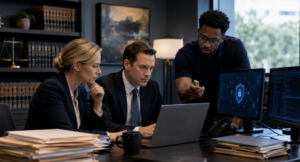
Title IX cases are rarely confined to paper files and face-to-face conversations. Evidence may be stored in emails, text messages, cloud accounts, learning-management systems, security-camera recordings, social media profiles, mobile devices, and institutional databases. A law firm handling these matters must be prepared to receive, preserve, review, and protect digital information without compromising confidentiality or damaging potentially important evidence.
For a Title IX Attorney Virginia clients rely on during a difficult academic dispute, dependable IT support is more than a routine business service. It is part of the firm’s ability to protect client information, maintain accurate records, prepare persuasive arguments, and respond quickly when deadlines are approaching. Reliable technology allows attorneys to focus on legal strategy while trained IT professionals maintain the systems supporting that work.
Title IX Cases Now Depend Heavily on Digital Evidence
A modern Title IX investigation may involve a significant amount of electronic communication. Students, faculty members, administrators, witnesses, and investigators frequently communicate through email, messaging applications, student portals, and video conferencing platforms. A single message, timestamp, attachment, or login record may help establish when an event occurred or whether an account is consistent with the available evidence.
Digital evidence can also disappear quickly. Messages may be deleted, cloud accounts may be closed, devices may be replaced, and applications may automatically remove older records. A reliable IT provider can help a law firm establish procedures for collecting and preserving digital information before it is altered or lost.
Preservation must be handled carefully. Copying a screenshot into a folder may be useful, but it may not capture the metadata connected to the original file. Metadata can contain dates, times, device information, authorship details, and revision history. Attorneys may need these details when reviewing conflicting timelines or evaluating the authenticity of a document.
Professional IT support helps the firm maintain organized, protected, and accessible copies of electronic materials. It also reduces the likelihood that an employee will accidentally overwrite a file, remove important information, or store evidence in an unsecured location.
Confidential Client Information Requires Strong Protection
Title IX matters often involve deeply personal allegations, educational records, medical information, disciplinary documents, witness statements, and private communications. Unauthorized access to these records could harm the client, interfere with the case, and damage the law firm’s reputation.
Cybersecurity must therefore be built into the firm’s daily operations. The National Institute of Standards and Technology Cybersecurity Framework provides organizations with guidance for identifying, assessing, and managing cybersecurity risks. A dependable IT provider can use recognized security principles to evaluate the firm’s network, devices, software, accounts, and data-storage practices.
Security begins with understanding where information is stored. A firm may use local computers, mobile phones, email accounts, cloud drives, case-management software, document portals, and third-party applications. Each system creates a possible access point that must be protected.
Reliable IT support can help establish encryption, secure cloud storage, device-management policies, automatic updates, antivirus protection, account monitoring, and restricted user permissions. These safeguards make it harder for unauthorized individuals to obtain confidential information and easier for the firm to detect unusual activity.
Multifactor Authentication Helps Protect Legal Accounts
Passwords alone provide limited protection. Attorneys and staff members may reuse passwords, choose weak credentials, or unknowingly enter login information into a fraudulent website. A compromised email account could expose confidential conversations, attachments, calendars, contact information, and password-reset links for other services.
The Cybersecurity and Infrastructure Security Agency recommends multifactor authentication as an important safeguard against unauthorized access. Multifactor authentication requires an additional verification method beyond a password, such as an authentication application, security key, or approved device.
An IT provider can implement multifactor authentication across email, cloud storage, case-management systems, billing platforms, and administrative accounts. The provider can also help the firm select stronger verification methods and create procedures for recovering accounts without weakening security.
This protection is particularly important when attorneys work remotely, travel between offices, or access records from court, campus, or home. Secure access should remain convenient enough for legitimate users while creating meaningful barriers for intruders.
Email Security Deserves Constant Attention
Email remains one of the most common ways for law firms to communicate with clients, opposing counsel, educational institutions, experts, and witnesses. It is also a frequent target for phishing, impersonation, malware, and fraudulent payment requests.
A message may appear to come from a client, school administrator, colleague, or technology vendor. The sender may request a password reset, ask the recipient to open an attachment, or direct the firm to a false login page. One hurried click can give an attacker access to sensitive records.
Reliable IT support can strengthen email filtering, block suspicious attachments, monitor unauthorized login attempts, and configure domain protections that make impersonation more difficult. Staff training should accompany these technical controls because employees remain a crucial part of the firm’s security.
The Microsoft cybersecurity overview describes effective cybersecurity as a combination of people, processes, best practices, and technology. That approach is particularly relevant to law firms. Security software cannot replace careful judgment, and careful employees cannot compensate for outdated or poorly configured systems. Both must work together.
A Clear Chain of Custody Strengthens Digital Evidence
Attorneys must be able to explain where evidence came from, how it was collected, where it was stored, and whether it was changed. This record is often described as a chain of custody. Although the exact legal requirements depend on the proceeding and the type of evidence involved, orderly documentation can help establish reliability.
IT professionals can support the chain of custody by creating protected evidence folders, logging access, preserving original files, and maintaining working copies for review. They can also help record file hashes, which function as digital fingerprints. When the hash value of a file remains the same, it provides technical support for the position that the file has not changed.
Digital evidence should not be casually opened, renamed, converted, or transferred between personal devices. Every unnecessary action creates another opportunity for information to be modified or separated from its original context. A defined evidence-handling process gives attorneys and staff clear instructions from the moment a file is received.
When advanced analysis is necessary, the firm may also coordinate with a digital forensics professional. Digital forensics and incident response can involve identifying, collecting, analyzing, and preserving information connected to a security incident or disputed event. Reliable IT support helps the law firm determine when routine technical assistance is sufficient and when specialized forensic expertise is appropriate.
Secure File Sharing Protects Clients and the Firm
Standard email attachments may not be the best method for exchanging large or sensitive files. Title IX records can include lengthy investigative reports, audio recordings, video files, screenshots, medical documentation, and collections of messages. These materials may exceed email limits or require additional security.
A protected client portal provides a more controlled method of transferring documents. The firm can require secure login credentials, restrict access to specific users, and remove access when the representation ends. Some systems also maintain activity logs showing when a document was uploaded, downloaded, or viewed.
IT support is essential when selecting and configuring a file-sharing platform. A service may advertise encryption and privacy features, but its default settings may not match the needs of a law practice. Permissions, retention settings, sharing links, account recovery procedures, and administrative access must be reviewed carefully.
Clients also need simple instructions. A secure portal loses much of its value when a client becomes frustrated and sends confidential information through an unprotected personal account instead. The right IT system should balance strong security with practical usability.
Reliable Backups Keep Cases Moving
Technology can fail without warning. A laptop may stop working, a server may become corrupted, a cloud account may be locked, or malicious software may encrypt files. Without a tested backup system, the firm could lose correspondence, legal research, evidence, drafts, and deadline information.
Backups should be automatic, encrypted, monitored, and stored separately from the primary system. Keeping a second copy on the same computer provides little protection if that device is stolen, damaged, or infected. A reliable IT provider can establish multiple backup layers and regularly verify that files can be restored.
Testing is just as important as creating the backup. A system may appear to be saving information while silently skipping folders or producing unusable copies. Periodic restoration tests allow the firm to confirm that critical records remain available.
The Federal Trade Commission’s data breach response guidance emphasizes the importance of securing operations, identifying affected systems, and developing an organized response after an incident. A documented recovery plan allows a firm to act deliberately rather than improvising during an emergency.
Remote Work Creates Additional Responsibilities
Many attorneys and staff members work from home, travel with laptops, or use mobile devices to review messages. Remote access can improve efficiency, but it also creates security concerns involving home networks, lost devices, public Wi-Fi, shared computers, and unapproved applications.
An IT provider can establish secure remote-access tools, device encryption, mobile-device controls, and virtual private network services when appropriate. The firm can also require automatic screen locks, strong authentication, approved storage locations, and remote wiping for lost equipment.
Personal and professional information should remain separated. Saving client files to a family computer or personal cloud account may expose those records to other users and make preservation more difficult. Firm-managed devices and accounts allow security settings to be applied consistently.
Remote work policies should address practical situations rather than relying on broad instructions to “be careful.” Employees need to know where files may be stored, which applications may be used, how incidents should be reported, and what steps to take when a device is lost.
Case-Management Systems Improve Organization
A Title IX practice may handle correspondence, appointments, investigative records, research, deadlines, billing information, and client updates for several matters at once. Scattered spreadsheets and individual email folders create unnecessary risk.
A well-configured case-management system can centralize important information and control who may access it. Attorneys can organize documents, assign tasks, record notes, monitor deadlines, and maintain communication histories without searching through unrelated folders.
This type of structured technology support reflects the principles of IT service management, which focuses on designing, delivering, operating, and controlling technology services around an organization’s needs. For a law firm, the goal is not to purchase more software. The goal is to create dependable systems that support legal work.
IT professionals can assist with software selection, data migration, permissions, integrations, updates, and employee training. They can also evaluate whether a proposed platform creates new security or compatibility problems.
Fast Technical Support Protects Important Deadlines
Legal deadlines do not move simply because an attorney cannot access email or open a document. A malfunctioning computer, failed internet connection, corrupted file, or locked account can interrupt preparation at a critical moment.
Responsive IT support gives the firm a clear place to turn when something goes wrong. Instead of searching online for an uncertain solution, employees can contact a professional who understands the firm’s systems and security requirements.
Routine maintenance also prevents many emergencies. Software updates, storage monitoring, hardware replacement, account reviews, and backup checks reduce the likelihood of sudden disruption. Preventive support is usually less damaging than emergency repair after a system has already failed.
The firm should know how quickly its provider responds, which services are monitored, how after-hours incidents are handled, and who has authority to approve major changes. Clear expectations improve accountability and reduce confusion during urgent situations.
IT Planning Supports Long-Term Growth
Technology decisions affect the firm’s ability to grow. Adding attorneys, opening another office, hiring remote employees, or expanding the number of cases can place pressure on systems that were originally designed for a smaller practice.
Reliable IT support helps the firm plan for additional users, storage, licensing, security, and equipment before performance begins to suffer. It can also identify redundant subscriptions and outdated systems that increase expenses without providing meaningful value.
A long-term technology plan should include security reviews, hardware replacement schedules, software evaluations, employee training, incident-response procedures, and backup testing. The plan should evolve as the firm’s caseload, staffing, and services change.
Strong IT planning also demonstrates professionalism. Clients expect their attorneys to handle private information carefully. Educational institutions and opposing counsel expect documents to be exchanged efficiently. Courts, hearing officers, and investigators expect electronic materials to remain accessible and organized.
Conclusion
A Title IX law firm works in an environment where legal strategy and technology are closely connected. Communications, records, timelines, and supporting evidence increasingly exist in digital form. Those materials must be preserved, organized, protected, and available when attorneys need them.
Reliable IT support strengthens the firm’s ability to safeguard confidential information, maintain digital evidence, communicate securely, recover from disruptions, and meet important deadlines. It also provides a foundation for remote work, case management, employee training, and long-term growth.
Technology should never become an obstacle between an attorney and the client who needs help. With dependable systems and knowledgeable support, a Title IX law firm can concentrate on careful preparation, persuasive advocacy, and the responsible handling of every case.