The typical life of an IT professional often involves long hours hunched over a keyboard, immersive work sessions, and sitting in a chair far too long. This sedentary posture isn’t just tiring — it impacts your muscular strength, especially in the lower body. For quads (the front thigh muscles), building strength and endurance with targeted exercises can offset the mobility losses and discomfort that come from deskbound routines. In this article, we’ll explore why a quad-focused dumbbell workout is especially relevant for IT employees, and then provide a solid, structured routine to follow.
Why Quads Matter for Desk-Bound Work
Even though you might think of lower-body strength as more relevant for athletes, for an IT professional, the quads play a vital role. Prolonged sitting leads to under-utilisation of the thigh and glute muscles, which can result in stiffness, weakness and postural problems. One article points out that “sitting decreases … strength in legs and glutes” and that leg muscles like quads and hamstrings lose activation after long periods of inactivity. Aaptiv+1 Strong quads contribute to better knee stability, improved mobility when you stand or move, and better posture overall. According to a health resource, quad exercises help protect your knee joint, improve balance and support everyday movements such as getting out of a chair. Healthline
Additionally, for the quad muscles themselves, training them with proper exercise has been shown to build strength and hypertrophy (muscle growth) effectively. StrengthLog+1 In other words, focusing on quads via dumbbells is a very smart strategy for IT employees who want to counteract the effects of sitting and maintain strong legs.
The Dumbbell Quad Workout: What to Do and Why
Here is a workout plan built for IT professionals — people who may not have large blocks of time, but want efficient, effective leg training. It uses dumbbells because they are flexible, convenient, and accessible whether you work out at home or at a gym.
Warm-Up (5–10 minutes)
Begin with some light mobility: leg swings front to back, side to side; bodyweight squats; marching in place. This helps mobilise hips, knees and ankles before loading your quads. Because sitting tightens hip flexors and weakens legs, warming up is key. Cleveland Clinic+1
Workout Structure
Pick 2–4 of the exercises below depending on your time and fitness level. Aim for 3 sets per exercise, with reps in the 8–15 range (choose heavier weights for lower reps if you’re more advanced). Rest 60-90 seconds between sets.
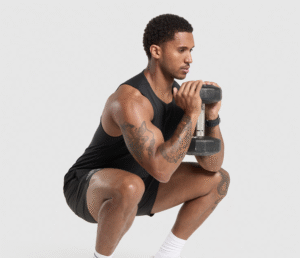
Exercise 1: Dumbbell Goblet Squat
Hold one dumbbell at your chest (both hands) and squat down, keeping chest up and knees tracking over toes. Stand back up, drive through your heels. This targets the quads strongly and helps you develop proper squat mechanics. Dumbbells free you from machines and allow natural movement. The Manual+1
Exercise 2: Dumbbell Split Squat (Unilateral)
Stand in a split stance (one foot forward, one back), hold dumbbells by your sides, and lower your body until your front thigh is roughly parallel to the floor. Drive back up. Doing unilateral (one leg at a time) work is especially beneficial if you sit all day and one leg becomes dominant or weaker. It also forces your quads to work independently for stability.
Exercise 3: Dumbbell Step-Ups
Find a bench or sturdy platform. Holding dumbbells in your hands, step up with one foot, drive through the quad of the stepping leg, bring the other leg up, then step back down. This exercise gives a strong quad activation and also mimics functional movement (standing up, climbing). The elevation element increases the quad demand. Iron Bull Strength – USA+1
Exercise 4: Dumbbell Forward Lunges or Reverse Lunges
Hold dumbbells at your sides. Step forward (or backwards) into a lunge, lowering until both knees are bent ~90°. Push back to start. Lunges engage the quads, hamstrings and glutes — but by emphasising forward step and focusing on front leg drive, you can target the quads deliberately. Dumbbells make this accessible at home.
Cooldown / Stretching
After your sets, spend 5 minutes stretching the quads (standing quad stretch), hip flexors (kneeling lunge stretch) and hamstrings/glutes. Because sitting tightens the hips and affects lower-body function, taking time to stretch helps maintain mobility and reduce stiffness.
Making It Work for IT Professionals
Here are some practical tips specifically for people in IT or desk jobs:
-
Schedule it: Choose a consistent time (e.g., after work or lunch break) to do your dumbbell quad workout. Consistency is more important than length.
-
Start modest: If you’ve been sitting most of the day, your legs might feel fatigued quicker. Begin with lighter weights or fewer sets, and progress gradually.
-
Break the sitting cycle: Even apart from your workout, stand up, walk or perform light leg activation every 30–60 minutes. This interrupts the negative effects of sitting.
-
Use proper form: Since your quads have likely been under-activated, focus on form more than heavy weight. Good form prevents knee issues and maximises quad engagement.
-
Progress over time: Aim to increase weight, add reps or reduce rest as you become stronger. This ensures your quads continue developing. According to quad hypertrophy guides, progression and volume matter for gains. RP Strength+1
-
Pair with mobility & posture work: Since IT professionals often have tight hip flexors, weak glutes and prone to lower back stiffness, combine your quad strength work with hip and glute mobility. This keeps your entire lower-body system balanced.
Conclusion
For IT employees who spend much of their day sitting, developing quad strength with dumbbell workouts is an excellent investment in your body’s resilience, mobility and posture. Strong quads help with daily movement, knee stability, and counteract the adverse effects of sedentary work. By integrating the best workout for quads dumbbell routine involving goblet squats, split squats, step-ups and lunges — and combining that with mobility work and habit changes — you’ll build lower-body power without needing elaborate equipment or massive gym sessions. Make it a habit, stay consistent, and your quads will thank you. 💪
For further reading about technology news and workplace health trends, you may explore the genre of Slashdot (focused on IT and tech news) Wikipedia and the broader field of Technology journalism. Wikipedia And as always, for reference on strength training technique, see the article on the basic squat exercise. Wikipedia